
Illustration by The Umuada production
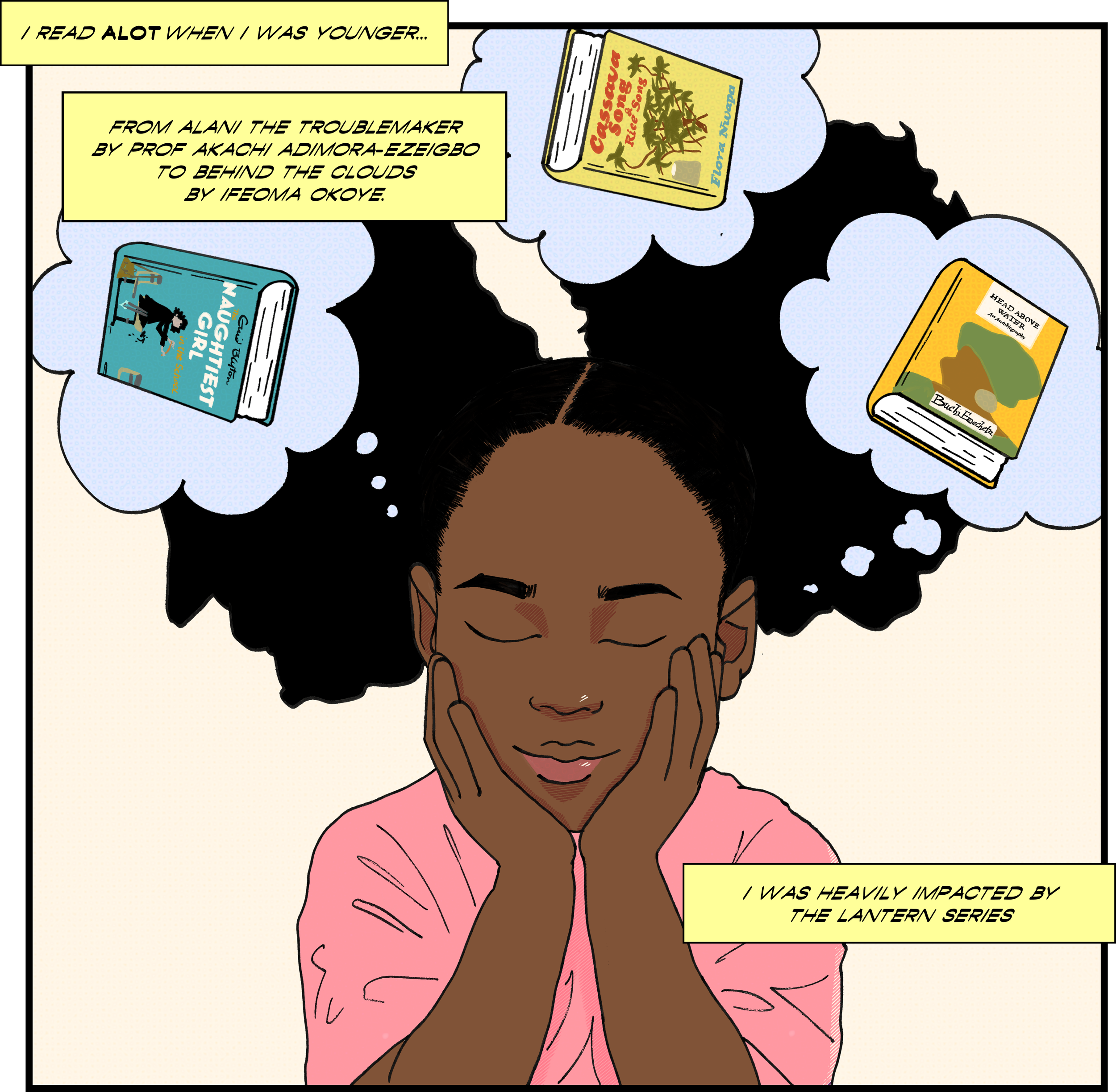
I grew up in a house full of books. Some of my earliest memories involve discussing books with my mother who taught English language and my father who worked as a journalist.
Even more, I grew up in a home where African literature was discussed. My mother discussed African women authors like Buchi Emecheta. Due to how my mother taught English, I was exposed to other women authors like Felicia Onyewadume and Ifeoma Okoye through the books she used to teach her students. If I close my eyes, I can recall the delight I felt reading one of Ifeoma Okoye’s books called Chimere.
I read anything that I could lay my hands on. I read Ghanaian books. I read British books by authors like Enid Blyton. I read books like Gossip Girl and The Shopaholic series.
Now, in reading classic Nigerian literature, I must admit that a lot of my early reading was tilted heavily towards those touted as the fathers of Nigerian literature.
I still remember reading Things Fall Apart by Chinua Achebe on my way to the village when I was about seven years old and being captivated by the language and imagery invoked in the novel.
My childhood and primary school experience was also heavily defined by reading books from The Lantern Books series. It was in the Lantern Books series that I discovered feminist leaning authors like Prof. Akachi Adimora-Ezeigbo. Her children’s books like Alani The Troublemaker taught me about rape culture, having an independent mind as a woman and being hardworking in my studies.
As I grew older, the Lantern Books series was shelved to another part of my mind and I stopped seeing them around. However, I never forgot the impact that Prof. Akachi Adimora-Ezeigbo’s books had on me. It was when I was about 16 that I re-encountered her books like the House of Eagles trilogy which spoke on feminism in Igboland. Although it was my mum who was reading the trilogy, I still remember her discussing the books with me.
In 2023 and parts of 2024, I decided subconsciously to go back to the authors of my childhood. This decision saw me read Roses and Bullets, a novel about the Biafran war by Prof. Akachi Adimora-Ezeigbo. It remains to me one of the few novels about Biafra that discusses in depth how Biafran women were at risk of sexual assault and rape even from Biafran men. It is a novel that highlighted to me the very reality that women may fight side by side with men but a nation’s freedom very often did not translate to the freedom of a nation’s women.
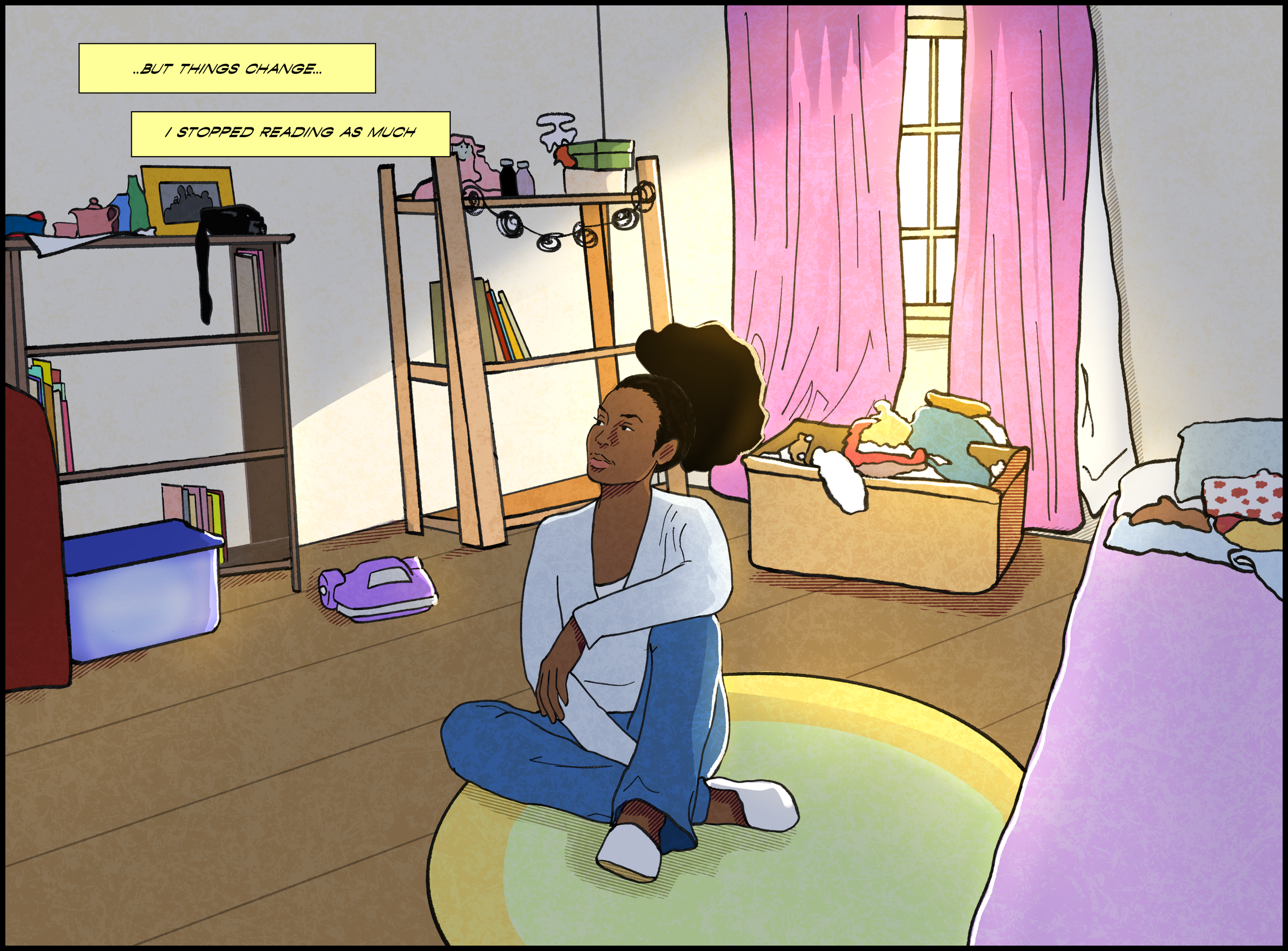
Illustration by The Umuada production
My reconnecting in 2024 to stories and authors from my childhood made me rediscover women authors like Ifeoma Okoye. Growing up, I vividly remember reading her novel Chimere in my first secondary school. Courtesy of my mum who is a retired English teacher, I read her novel Behind The Clouds around the time I was in secondary school too.
I often think of Okoye’s Behind The Clouds as a forerunner to novels like Stay With Me by Ayobami Adebayo. Okoye’s novel explores themes like infertility, adultery and how women tend to be blamed for the inability of a couple to bear children.
In reading her novel again last year, I was reminded of how normalised in Nigerian society is, the assumption that a man can never be held accountable both when he commits adultery and in the instance of failure to bear a child. Just like in Adebayo’s Stay With Me, the automatic assumption is that any woman who cannot produce a child must be replaced by another woman even if no checks have been done to ensure the man’s body is healthy and actually not the problem.
In discussions about the women veterans of Nigerian literature, three women writers have stamped their influence in the very fabric of Nigerian pro women literature.
The first is Buchi Emecheta who wrote Joys of Motherhood and several other books like Kehinde, Second Class Citizen, Double Yoke and The Slave Girl to name a few. Emecheta’s novels remain classics due to how timely they are in addressing issues that even modern day Nigerian women encounter.
Her novel Kehinde for example, is an expository into how immigration patterns differ for women; such that Nigerian women may be tolerated by Nigerian husbands in countries like the United Kingdom, but are despised the minute the entire family moves back to Nigeria.
In books like Joys of Motherhood, Emecheta tackled the popularly held belief amongst Igbos that motherhood and in particular bearing sons was the only pathway to a well fulfilled old age for a woman.
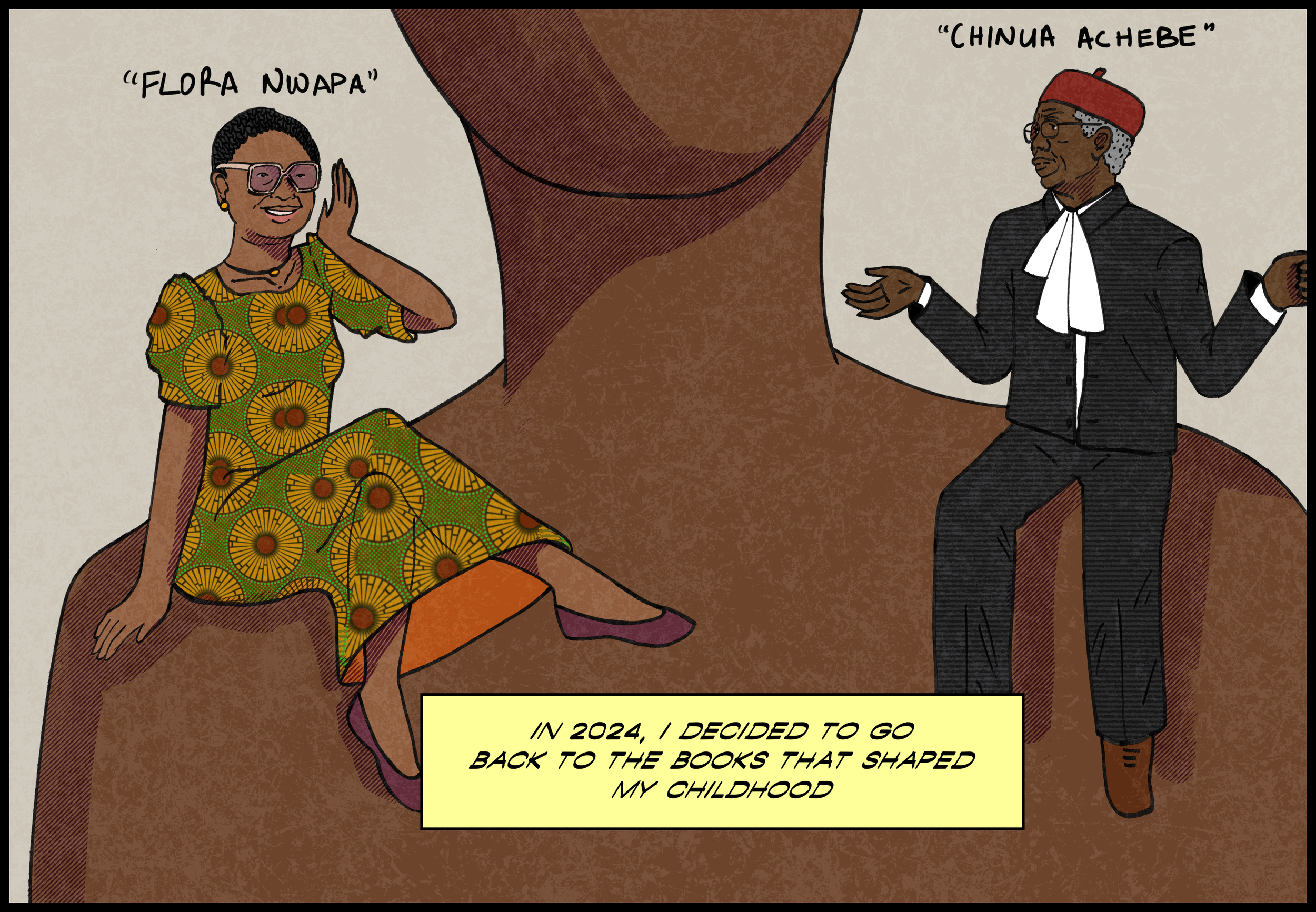
Illustration by The Umuada production
By juxtaposing characters like Adaku who had only daughters and was very ambitious, forward thinking and daring, alongside characters like Nnu Ego who placed her value in her sons and more or less neglected her daughters, Emecheta showed that having daughters is no less valuable for a woman’s old age. Instead, she advocates that women must be willing to adapt to new societal changes while maintaining a daring spirit and mine.
In 2023, news reports carried the protests against sexual harassment in University of Calabar. Led by students of UNICAL’s law department against Prof Cyril Ndifon, it led to a larger discussion on sexual harassment in Nigerian universities. What is interesting is this: Buchi Emecheta has a novel called Double Yoke that documents on-campus harassment. The novel was also set in the University of Calabar and was published in the 80s. This I believe is the defining arc of Emecheta’s novels. They represent both a balm and a call to the reality that we are still talking about the same issues across decades even if progress is being made.
Another veteran woman writer who deserves her accolades is Flora Nwapa. The author of novels like Efuru, Idu, Women Are Different and One Is Enough. Nwapa was a Nigerian writer from Oguta in present day Imo State. In addition to several accolades, she was the founder of Tana Press, a pro-women publishing press that published and promoted women authors across Nigeria. She is also touted as the first African woman to publish a novel in English. The novel which gave her this prestige was Efuru, a novel that explored the themes of infertility, spirituality and how women could experience joy and fulfillment outside of the confines of motherhood.
Critics of African women’s literature have often placed Emecheta’s Joys of Motherhood as a response to and continuation of the questions posed in Nwapa’s Efuru. The questions of if and how motherhood constitute the joys of women in African societies and a continuation of a commentary on how women must find their worth outside of only motherhood.
Again, just like how Emecheta’s Second Class Citizen was a semi autobiography, Nwapa’s Women Are Different was also a semi autobiography. In both books, Emecheta and Nwapa assert that the major path to survival for women is when we realise that even if we are different, we must form solidarity with one another and create intentional sisterhoods.
The third woman who has stamped her mark in Nigerian literature and in particular, Northern Nigerian literature is Zaynab Alkali. Her novels like The Stillborn and The Virtuous Woman were required reading in most secondary schools and Nigerian English university departments. It has often been said that Northern Nigeria tends to be a bit more conservative and while that is open to debate, what cannot be debated is that through her writing, Alkali paved and continues to pave the way for modern feminist leaning Northern writers like Aisha Kabiru Mohammed.
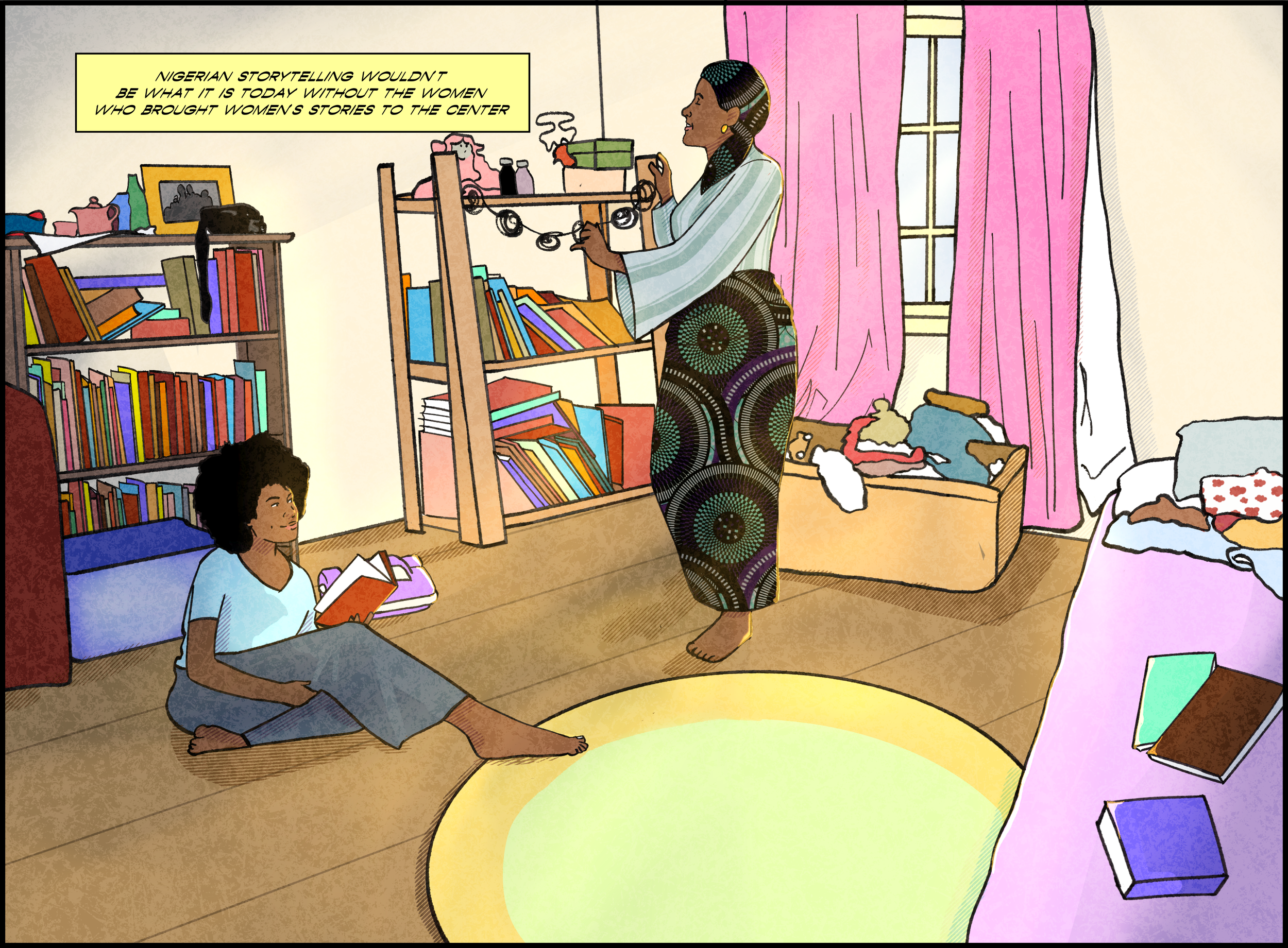
Illustration by The Umuada production
It is not only in prose and fiction that Nigerian women have made lasting footprints. In drama and theatre, one cannot ignore playwrights like Zulu Sofola and Felicia Onyewadume. Sofola was the playwright behind Wedlock of The Gods and was also the first female Professor of Theatre Arts in Africa. Her plays like King Emene and the aforementioned sought to document Western Igbo customs and also challenged patriarchal views on widowhood that subjugated women. Onyewadume is the playwright behind the recommended book of plays Echoes of Hard Times which was recommended reading in most secondary schools in Nigeria. It is a timely play as it documented the effects of economic recession on families and women; a theme that Nigerians in 2025 will definitely see themselves reflected in.
In poetry, numerous women have sought to stamp their names in Nigerian literature. Some of them include Mabel Segun, Ifeyinwa Lekwa and Prof. Catherine Acholonu. Ifeyinwa Lekwa is a poet that actively spoke on the experiences of women during the Nigeria-Biafra war of 1967-1970.
Prof. Acholonu was also a politician, women’s rights activist and researcher. She is notably known for theorising the concept of Motherism which is a women’s movement that aims to advocate for all women and especially mothers.
Although Nigerian literature and reading culture can see some improvements, it is important that we acknowledge that Nigerian storytelling would be nowhere near what it is without the women who did the groundwork to bring women’s stories to the center.
These women like Prof. Akachi Adimora-Ezeigbo, Zaynab Alkali, Buchi Emecheta and numerous others paved the way for newer writers like Chimamanda Ngozi Adichie.
For this reason, there must be active steps to give them their flowers and document their contributions not only to Nigerian women’s literature but also the greater feminist movement.