
Anthony Azekwoh on The Wedding Series and the Stories Behind His New Paintings
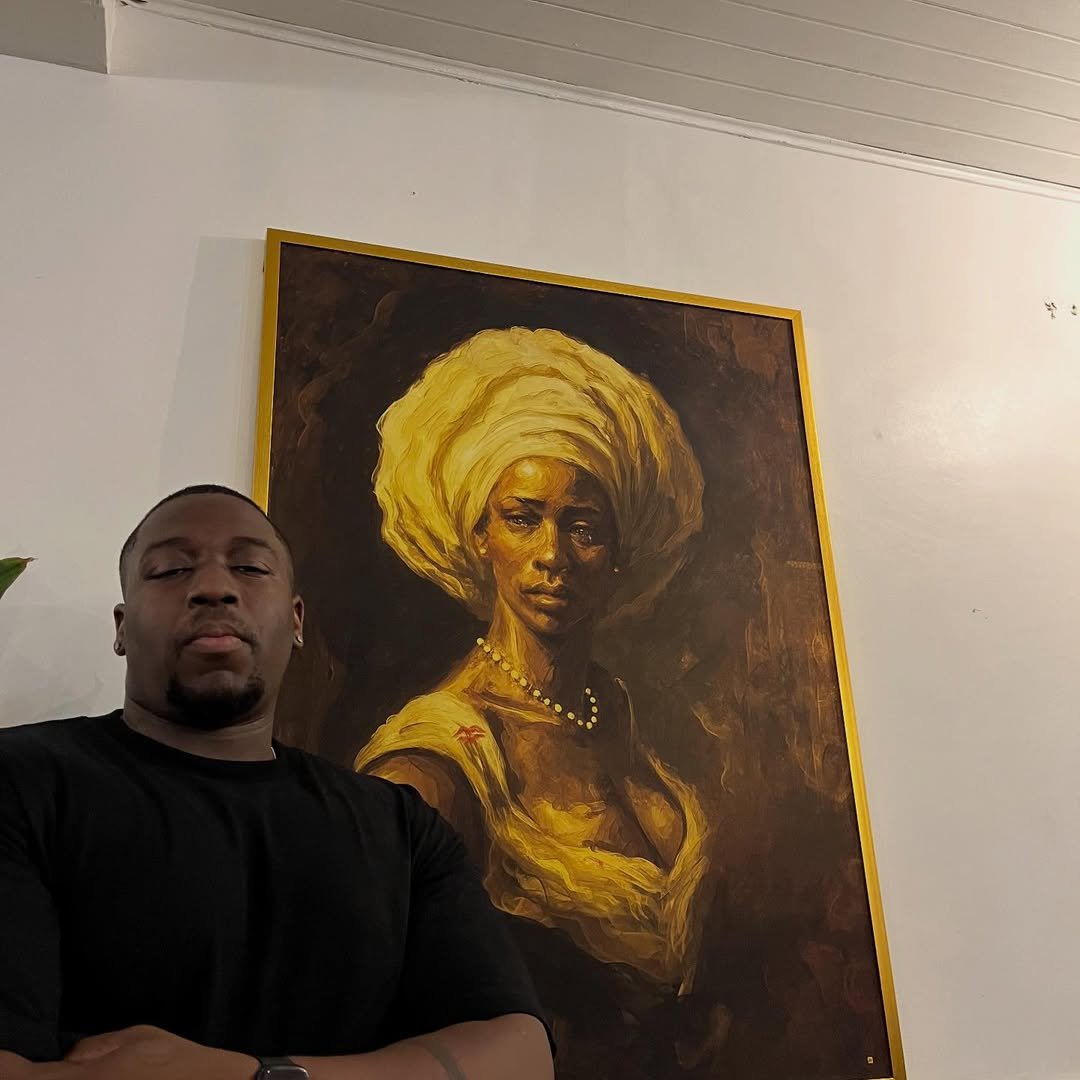
Anthony Azekwoh and The Bridesmaid piece
It’s hard to miss the social media buzz around Anthony Azekwoh’s latest digital art series, The Wedding. On September 1, when he posted the first piece, “The Bridesmaid”, on his social media pages, the piece quickly gained momentum from its viewers. Since then, it has amassed over 10 million views, inspired follow-up pieces, started a fiction writing challenge, and encouraged contributions from other artists. What we thought was a single artwork has evolved into a cultural moment, bringing together storytelling, art, and Nigerian culture in one collection.
Anthony Azekwoh is a contemporary artist, author, and entrepreneur based in Lagos. His work is grounded in African folklore and mythology, using these themes and figures to tell stories of his country, transformation, and change. Anthony is familiar with change; teaching himself how to draw as a child after solely being a writer; dropping out of school to pursue his art career; and working between digital and traditional, painting and sculpting. Change has been a common theme in his work that he has explored with diverse subjects and mediums.
Anthony Azekwoh is one of the many African digital artists exploring collective memory, drawing on people, history, and everyday life to tell visually compelling stories. With ‘The Wedding’, he is not only shifting how viewers engage with art online but also expanding how culture can be expressed and documented through digital art. As the series gained traction, I spoke with Anthony Azekwoh about his process and the world he is building through this collection.

The Wedding
“The Wedding is a large collection of my work, All of us have been to weddings and experienced different archetypes of wedding guests, which has always interested me.”
During our conversation, he explained that although he began making art professionally in 2020, storytelling has always been central to him. His essays, My Interview with God and What Love Is, are some of his earlier works that demonstrates this.
“When I started, primarily I started with writing in 2013, and two of my first viral works were pieces of writing,” he said. “Writing is a medium where I am able to communicate with my writing, my thoughts, my feelings. Somewhere along the line, my laptop broke, so it meant that I couldn’t write for a while. I had some papers around the house, so I just kept on scribbling on them; it felt natural.”
Azekwoh describes ‘The Wedding’ as both a story and an art series. “The Wedding is a large collection of my work,” he said. “All of us have been to weddings and experienced different archetypes of wedding guests, which has always interested me. There is the aunty who is negotiating for food because the waiter hasn’t waited at their tables, there are people who are tired, but because you invited them, they are still around, but will be gone in 5 minutes, there are some people who don’t even like you like that, but they are there. That has always been interesting to me. So I want to depict that.”
Nigerian weddings are famously known for the grand, colourful, loud, crowded, and deeply communal way that they are done. It’s one of the intimate celebrations where hundreds of guests gather in one space, each bringing their own personality, intentions, and expectations. From aunties policing caterers to friends documenting every moment, and experiencing different cultures and traditions, weddings capture a mix of what it means to be Nigerian. This is why the series has been so engaging, especially for Nigerians who appreciate the representation that this series is exploring with its different characters.
Azekwoh’s series channels this familiar energy, prompting me to ask how many characters would appear throughout the collection and what he has learned from creating it. He has currently released 9 characters, out of many: The Bridesmaid, The Best Man, The Maid of Honour, The Aunty, The Uninvited, The Groom’s Mother, The Latecomer, The Mother of the Bride, and his latest painting, The Father of the Groom. Each of these characters have different roles, personalities, and facial expressions that make them unique.
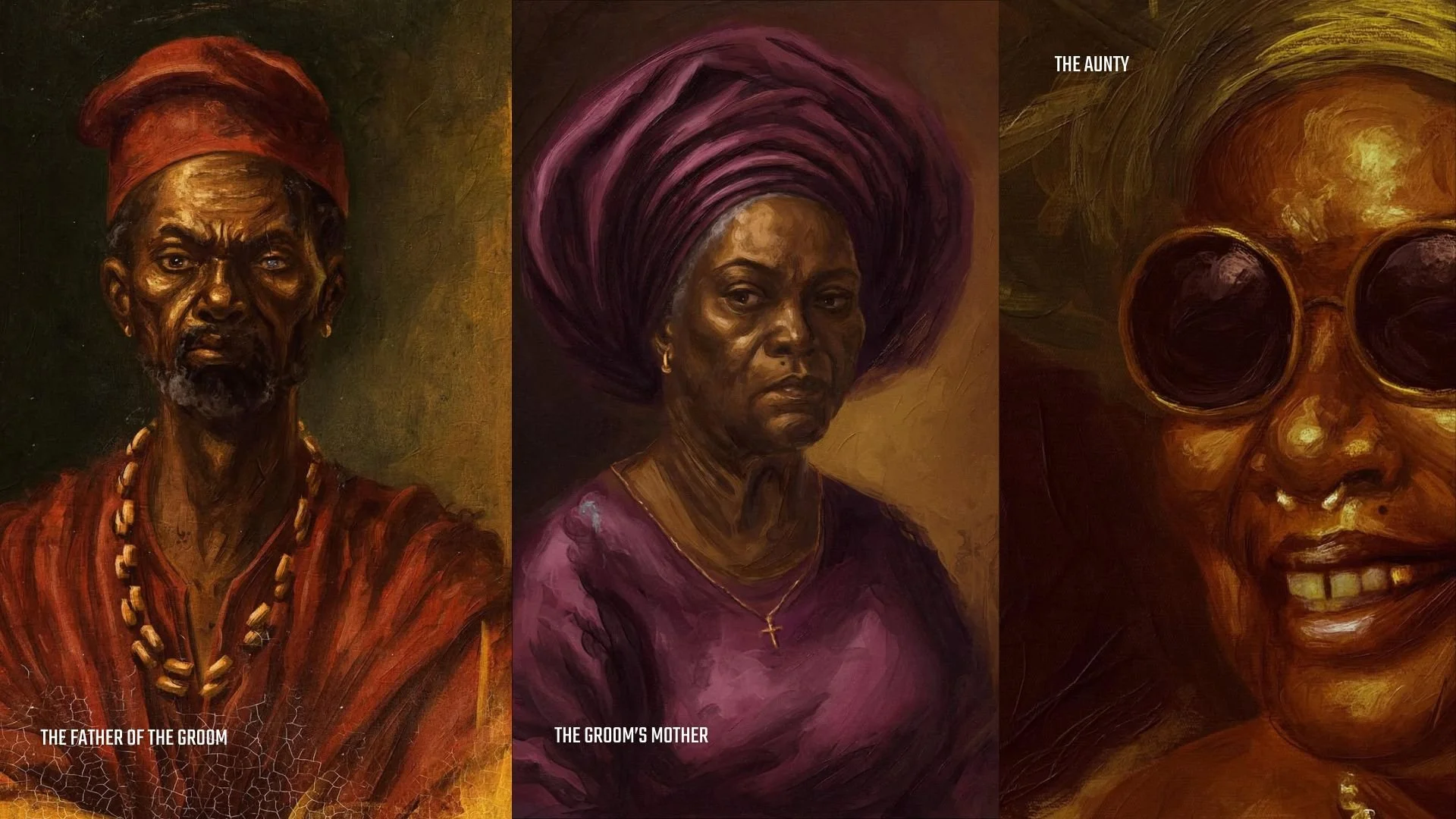
The Wedding
“I feel like this has been a very intimate process in the sense that every piece has kind of come through not from rushing the work but through its own natural rhythm,” he said. “And it showed me a lot about the people around me. I have learned so much about my friends, about their wedding and partnerships, and myself. I guess talking to someone through this process is a very interesting thing. It has really been a lot, I guess.”
The scale of public reaction was something he did not anticipate. “I wasn’t expecting it,” he said when asked about the growing online response. For many, ‘The Wedding’ now carries its own evolving narrative, stories imagined between characters, speculations in the comments, and interpretations from viewers connecting with different pieces.
Despite this, Azekwoh maintains a firm boundary between audience expectations and his creative decisions. “I don’t really think about the audience when I am making my art, to be honest, that is something I learnt earlier on,” he said. “People can say they want something, and when you give them, they are like ‘Nahh’. Most people don’t really know what they want, making art from the point of ‘I want to please certain perspectives’ is and has always been an exercise in failure. The way people perceive me it’s different from the way I approach my art. I am doing my thing.”
At the centre of the series, he explained, is a single theme.
“Whether it’s symbolic or not, one thing most people haven't grasped is that the whole series is just about love. And to me, that is what is important and symbolic about ‘The Wedding’, yes you have all these different people who have their own motives, but those people still come together and witness that union happening. Because in us there is this known feeling that there is something here that should be recognized. That to me is what is powerful.”
With each release of the different characters, the reactions are sometimes humorous, chaotic, and always relatable, even for people who previously felt no connection to art. Azekwoh intends for each viewer to bring their own interpretation. When I asked if he appears in the series (either as a guest or the groom), he laughed and replied that he would not be answering that. “All will be revealed soon.”
He is expanding the project beyond online release; his latest exhibition, opening from the 13th to the 18th of December in Lagos, is one of them, and it’s free for all. When asked what he wished people understood about him beyond the work, he offered a response many people might not expect.
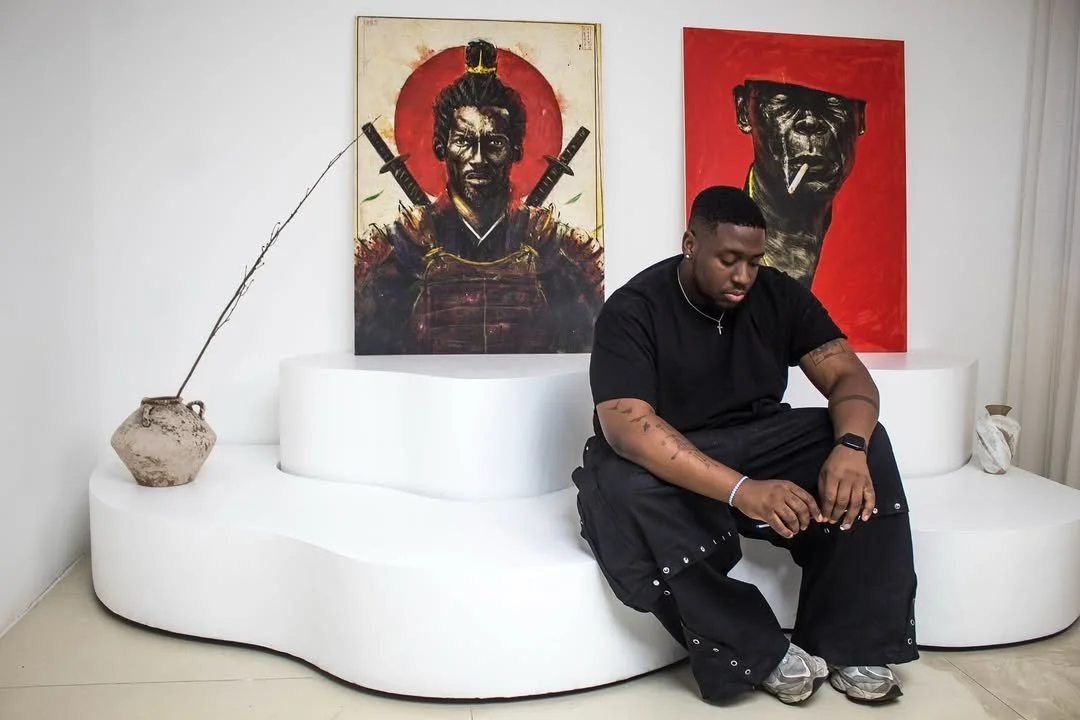
Anthony Azekwoh and his pieces, Yasuke and The RedMan
“Artists are expected to like their work (I guess). I feel like people ask me everything but one. Do I like it? That is the question nobody asks me: whether I like the work or not. There are some paintings that I actually don’t like, and there are paintings that take me a while to like. ‘The Red Man’ is one of them; it took me a year or two to get around that.”